Monday, May 31, 2010

Some Processional Images

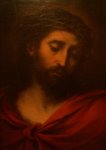
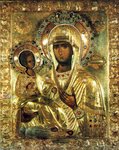
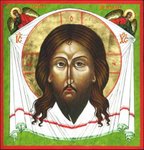
Just for fun, here are some processional images of the Passion, from one of the provinces (I think Rizal? Or Laguna?) here in the Philippines. These were found on Flickr, under Mr. Elmer Torres' (Flickr name magsicap) photostream. Depicted are: Nuestro Senor Desmayado (Christ with the angel, after the flagellation); Nuestro Senor de Las Sietes Palabras (Sto. Cristo between the Virgin and St. John); and El Descendimiento (Christ being brought down from the Cross).


Sunday, May 30, 2010

Historical Curiosities of San Agustin Church: The Antecoro


Photo of the Chapel at the antecoro (ante-choir) of San Agustin church in Manila. The retablo was formerly located in the Chapel of St. Augustine and contained the remains of the Spanish explorer, and founder of the city of Manila, Miguel Lopez de Legaspi. From the book 'San Agustin: Art & History 1571 - 2000', comes this excerpt about this chapel.

"... In the central niche of the retablo is a crucifix which is believed to be the same one brought by Fray Alonso de Mentrida  from the Visayas in 1602. Mentrida's crucifix originally stood over the railing of the adjoining choirloft. It is said that the image on the cross extended its hand in absolution to a friar who, in the throes of death, did not have recourse to the last rites. The British toppled the cross in 1762, remarking that it was black and ugly. During the restoration of 1970, this crucifix was recovered, cleaned of its coat of black paint, and installed in the present retablo. The rest of the champer was cleaned up in 1974 in time for the visit of the Superior General of the Order, Fr. Theodore Tack. The furniture and the rest of the statuary are from the Luis Maria Araneta collection.


The antecoro, small as it is, has its share of intriguing stories; the most scandalous of these was the murder of a high ranking member of the Community by some of the friars. One day in 1617 the prior provincial Fr. Vicente de Sepulveda was found murdered in his cell. In order to find the culprits who were suspected of still being in the monastery, the corpse was laid out in this room; its arm was propped up such that the index finger pointed at whoever entered the room from the corridor. By feeling the heartbeat of each friar who came to pay his respects, the perpetrators were unmasked; they were then tried, hanged, and buried within the walls of the compound..."

Monday, May 24, 2010

The Silence of God


One of the most harrowing novels I have ever read is 'Silence', by the celebrated Japanese author, Shusaku Endo. Set in seventeenth century Japan, the novel tells the story of Fr. Sebastiao Rodrigues, a young Portuguese priest hungry for glory and martyrdom, and his personal mission of finding his mentor Fr. Cristovao Ferreira, former provincial of the Jesuits in Japan, who is rumored to have apostasized after several hours of torture. The novel deals with mainly with the question of God's silence, that 'sickening silence', as Fr. Rodrigues puts it, in the face of the many sufferings of the small, withering Christian population in Japan. Why does God permit so much suffering to befall His people?, he asks.Why does God not cry out in defense of His faithful?

The story of the persecution of Christians in Japan is one of bitter pain and sorrowful reticence. Believers were often crucified to bamboo poles made to resemble crosses, as in the case of St. Paul Miki; the bodies were left to hang, and many were encouraged to do violence against them. A common procedure was to skewer the bodies with sharpened bamboo poles, pushed ever so slowly against the bodies of the Christians. In the novel, Endo highlights the use of water torture, in which Christians were tied to stakes and left in the water; the rising tide would do the damage. And perhaps most infamous of all, there was the pit, so-called because Christians were lowered onto a pit filled with all the filth of humanity-- feces, urine, vomit, among others-- to wallow like pigs. The flesh of the head was often cut as well, which served as breeding ground for bacteria. Safe to say, death in the pit-- if death came so quickly from it, that is-- was a very painful way to die.

Fr. Sebastiao Rodrigues has, naturally, been warned of these tortures, and has steeled himself for such a death from the moment he stepped on Japanese soil. But instead of hostile natives, he finds a clandestine community of Christians willing to die for their defense. Thinking himself safe within their community, the young priest starts to emerge from his hiding place more and more, until at last, he is noticed. As a result, the small Christian village becomes the target of greater scrutiny from the feudal lords, and from then on, Fr. Rodrigues begins to realize that martyrdom is not all it is cut out to be. And indeed, the more time he spends in Japan, the more he begins to see that his presence has brought nothing but bad luck to the Christian villages wise, or perhaps foolish, enough to welcome him. There too, is the bumbling, foaming, pathetic shell of man called Kichijiro, who apostasized from Christianity out of cowardice. Seeing his family tortured, but wanting to preserve his life, Kichijiro does the unthinkable and tramples upon the fumie of Christ.

A theme begins to arise at this point: is love worth it? Fr. Rodrigues believes that his mission to this most far flung nation of the earth was motivated by a greater love, a love that desires to unite all men in Christ. But, as he has seen, his love has done nothing but bring sorrow and misfortune to the already withering Christian population of Japan. Is it really love that moves him? And what of Christ, is His own love worth it? The person of Kichijiro represents, for Fr. Rodrigues, man at his most pathetic, that one simply cannot afford to loathe him anymore. Indeed, he adopts a kind of condescending pattering attitude towards Kichijiro. That Christ died for sinners is easy enough to imagine, says Ferreira; but what about the mediocre?

However, it is the seeming indifference of God that troubles Ferreira the most, a God, who, it seems, was content folding His arms while His children suffered on earth. This is bolstered by the various acts of martyrdom that Fr. Rodrigues witnesses, the first, on the coast of the first village, where two young men are submitted to water torture. But there are no choirs of angels to be seen to collect the body of the murdered Christians, no peals of thunder echoing the wrath of God, nothing but the blackness and monotonous ebbing and flowing of an endless sea to accompany the two martyrs to Paradise, if such a concept were even impossible to believe in at tat moment. The second martyrdom sees Fr. Rodrigues captured by the shogun's samurai and brought to prison for questioning, a fate which was orchestrated by Kichijiro himself. Again, the familiar icons of the martyr narrative are gone; there are no hostilities between Rodrigues and his captors at all. On the contrary, he is engaged in theological discussion by a Portuguese-speaking translator and even treated with utmost politeness by Inoue himself, governor of Chikogoku, and sworn enemy of the Christian population in that part of Japan. Indeed, Inoue himself finds nothing wrong with Christian doctrine; he simply believes it will never take root in Japan, and being thus, was useless.

Here, Fr. Rodrigues sees an old, one-eyed man, a Christian like himself, die for Christ, in the most absurdly insignificant way, beheaded suddenly, quickly, nonchalantly, by men with no convictions and no stake and no care for Christianity at all, in short, hired men, with whom he would even occasionally banter. There was no tremor in the earth nor did the skies even darken when the old man died, just the dull and blind groaning of cicadas and the sleepy, noonday heat to witness another man die for the Faith.

However, it is Fr. Rodrigues's meeting with his old mentor, Fr. Ferreira, that most unnerves him. Ferreira had apostasized under torture, and concludes that Christianity would never fully take root in the strange swampy soil of Japan (Ferreira is a historical figure; he later wrote a tract refuting Christianity and became a Zen Buddhist monk). For Fr. Rodrigues, this blow was the most personal, the most damaging. Ferreira had planted the impetus for Rodrigues's desire to evangelize the Indies, but now his own convictions-- the same which planted itself so resolutely in Rodrigues-- was shattered. Eventually Rodrigues himself was to face the pit, and in one of the most haunting scenes in the entire novel, realizes that he, too, must commit the unthinkable, and so steps on the fumie.

At this point, Fr. Rodrigues realizes that God has never really been silent. As he gazes on the face of Christ, that face which he has clasped to his heart from his childhood, and the same face which, now blackened with the footsteps of thousands of men whose 'feet ached' at what they were about to do, simply stared back at him in agony. From a theological standpoint, we see here the audacious logic of the Incarnation: God emptying Himself of divinity and coming to dwell amongst the misery and grime of creation. Many cultures abound with myths of gods descending from heaven to dwell or mate with humankind, but where Christianity differs is that, Christ alone, of all the gods and demigods, knew the terror of God. There is a line in the novel where Fr. Rodrigues reflects on one of the seven last words of Christ: 'Eloi, Eloi, lama sabacthani', and concludes that, more than a prayer, it too must have 'issued from terror at the silence of God.'

A question is now raised about the nature of love: can God really be called a God of love, even when He has chosen not to eliminate it from the world? Perhaps a deeper issue that lies here is whether or not we think God was right in choosing to suffer with humanity, rather than remove the sufferings altogether. Love is heart-breaking, we often hear it said, but a point we always seem to forget, is that heartbreak hurts, and that it is a kind of hurt which affects both parties. When Fr. Rodrigues tramples on the fumie, he has an epiphany of sorts, and imagines the fumie saying to him:
"Trample! It was to be trampled on by men that I was born into this world. It was to share men's pain that I carried my cross..."
Paradoxically, the greatest act of kindness which Fr. Rodrigues can now do, is to trample on the face of Christ. He is informed by the interpreter that the Christians hanging in the pit have apostasized many times over, but these confessions would be useless until he himself does so. In agony, Rodrigues places his foot on the fumie, and in the spaces between seconds that are eternity, his feet ached, too, and in the far distance, a cock crowed, as it did for St. Peter when he denied Our Lord thrice. Whether Fr. Rodrigues's faith is now completely shattered, like his mentor's, is not explicitly stated, and the novel ends neither confirming nor denying if his moral integrity remained intact. But he is now a haunted man, and cannot now bear to stand to look at Fr. Ferreira, because he only sees the common ugliness that now festers in both of them, the ugliness, and madness, as it were, of love. But that perhaps is what martyrdom, and love, are all about-- to see the ugliness of sin and face it as it is. Fr. Rodrigues's pride demanded a physical, even brutal death in atonement and satisfaction for Ferreira's apostasy, but what was ultimately extracted from him was the crushing of his soul, the meriting of the hatred of the Church and the elect. 

In a line from the book, Fr. Rodrigues rationalizes his actions by saying that Christ, too, would have apostasized to save the lives of the Christians; after all, didn't He Himself apostasize, by emptying Himself of divinity? Do not his actions cheat man of God's justice? And most of all, did He not feel the absence of God while He hung on the Cross? If there is a point to be made here, is that to love, to, is to experience terror. Its logic is inscrutable, irrational, even dangerous. But at the same time, can it still be called love if it does not touch on these things? The Japanese Christians could have dumped Christianity en masse and gone back to Shintoism/Buddhism rather than endure suppression and the withering of their numbers. Why, then, did they choose to suffer? Endo gives us a clue by saying that, for the first time in their lives, they were treated as humans, as equals, as faces, by the Portuguese missionaries. In short, it was love that nailed the face of Christ to their breasts, the same way that love held His arms to the wood of the cross. Love, without any hint of polemic, politics, or agenda. There seems to be no other answer.

There, perhaps in a nutshell, is the reason why God has been silent-- because God finally has a face, a beautiful, ugly, sorrowful, agonizing, yet serene face, twisted, beaten, bloody, and yet strangely and profoundly beautiful, all the more so. The ultimate 'folly' of the Incarnation is that the Almighty has come down to be be butchered, to dwell amongst the squalor and misery of human existence. But where are the choirs of angels weeping? Where has their screaming gone? Why hasn't the earth rent itself in twain, and fire consume all creation, in justice for the murder of the Son of God? And we realize, that there is no answer to this question, except the face of Christ, in all its butchered mess, looking back with mournful eyes at humanity, saying, 'I too understand.' All we can hope to do is stare back.

"Eternal Father, turn away Thine angry gaze from all guilty people whose faces have become unsightly in Thy eyes. Look instead upon the face of Thy Beloved Son, for this is the Face of Him in Whom Thou art well pleased. We now offer Thee this Holy face, covered with shame and disfigured by bloody bruises, in reparation for the crimes of our age, in order to appease Thee anger, justly provoked against us. Because Thy Divine Son, our Redeemer, has taken upon His head all the sins of His people that they might be spared, we now beg of Thee, Eternal Father, to grant us mercy. Amen."

Thursday, May 20, 2010

Images of Christ in Ivory

In colonial Philippines, the Santo Cristo-- that is, the image of Christ Crucified-- was almost always the most expensive ornament a church may have. It has been rendered differently and through various media throughout the centuries, being painted, or made of wood, stone, or otherwise decorated with costly materials. In the Spanish tradition, rays of beaten gold or silver often extend from the arms of the cross, forming a sort of 'halo' or mandorla of sunbursts around the figure of the crucified. The corpus of the Santo Cristo was often done in ivory, considered the most expensive, and therefore, the most befitting, of the media in which the figure of Our Lord may be rendered. In the Philippines, as mentioned in the previous post, the Chinese excelled in this trade, eventually teaching the art to the native Filipino population. Ivory was sourced from Goa, itself a major hub of the ivory-related art; and in Macau, too, the tradition flourished. Notably, in the Philippines, the slightly askew, 'bent' shape of ivory images (a result of the natural curvature of elephant tusks), was seen as a sign of elegance and superior taste; the effect was also often replicated on non-ivory images.

In the aftermath of the revolution against Spain, many friars took a sizable share of the ivory images in the Philippines, back to their native country. As well, the galleon trade with Mexico ensured that these Far Eastern works of devotional art were duly represented in the New World. Here are some photos of various images of the Crucified in ivory. These images were found on Flickr; however, the exact provenances of these images, are still a matter of scholarly debate.

Photo source:
Apo Lakay's photostream on Flickr


These first two images are attributed to Leoncio Asuncion, one of the most renowned sculptors in 19th century Philippines. However, the image does not follow the conventions for the Santo Cristo as mostly found in the Philippines. A good overview on this may be read at the Flickr page where this photo was found: Sto. Cristo Expirante


Left: a Rococo style Sto. Cristo Moribundo, found at the San Agustin museum in Manila; and on the Right, three corpuses. The middle one is Filipino, while the two flanking it are thought to be Goan. Again, please visit Apo Lakay's photostream, which contains more information about these images.

Two more examples. Sadly, I regretted to make a mental note of the photostream(s) where I found these.

The image above may be found, if I remember correctly, in the Mexico city Cathedral. It is reputedly of Philippine provenance.

Finally:

This rather ornate, and sumptuously beautiful crucifix, is probably one of the most stunning I have ever laid eyes on. No word on the provenance, however. Notice the silver cantoneras and the rays emanating from the arms of the cross.

And, just for fun, here is a set of ivory images of Christ, that tell the story of the Via Crucis (link). These belong to a family in Iloilo, Philippines. From left to right, they depict Our Lord in prayer at Gethsemani; Nuestro Senor Cautivo (Our Lord Captive); Nuestro Senor de la Paciencia (Our Lord of Patience); Nuestro Senor de la Columna (Our Lord of the Column); the Ecce Home; and Nuestro Padre Jeus Nazareno (Our Father Jesus the Nazarene). This delightful image was found here: Via Crusis.

Sunday, May 09, 2010

Turris Eburnea (In Honor of the Month of Mary)

Tota pulchra es, Maria,
et macula originalis non est in te.
Vestimentum tuum candidum quasi nix, et facies tua sicut sol.
Tota pulchra es, Maria,
et macula originalis non est in te.
Tu gloria Jerusalem, tu laetitia Israel, tu honorificentia populi nostri.
Tota pulchra es, Maria.
Ivory image of the Our Lady of the Immaculate Conception, probably from Macau or the Philippines. The features of the image are notably Chinese, and it is well known that the Chinese settlers in the Philippines excelled in the craft of ivory sculpting. However, Macau was also well known for that fact, and was a major source of ivory for sculptors in the Philippines. It also deviates from the standard depictions of the Madonna in the Philippines (notably the hair and the resplendor). This image is found at the Metropolitan Museum of Art in New York City, where it is attributed to Philippine workshops and labeled under 'Spanish Colonial'.

Friday, April 30, 2010

The Summer Solstice

One of my favorite short stories ever. Do have a read;  it expresses a lot of the thoughts I've had regarding the nature of folk religion quite well. This shorty story was originally published in 'Tropical Gothic', an anthology of the author's short stories.


The Summer Solstice
Nick Joaquin

THE MORETAS WERE spending St. John’s Day with the children’s grandfather, whose feast day it was. Doña Lupeng awoke feeling faint with the heat, a sound of screaming in her ears. In the dining room the three boys already attired in their holiday suits, were at breakfast, and came crowding around her, talking all at once.

“How long you have slept, Mama!”

“We thought you were never getting up!”

“Do we leave at once, huh? Are we going now?”

“Hush, hush I implore you! Now look: your father has a headache, and so have I. So be quiet this instant—or no one goes to Grandfather.”

Though it was only seven by the clock the house was already a furnace, the windows dilating with the harsh light and the air already burning with the immense, intense fever of noon.

She found the children’s nurse working in the kitchen. “And why is it you who are preparing breakfast? Where is Amada?” But without waiting for an answer she went to the backdoor and opened it, and the screaming in her ears became wild screaming in the stables across the yard. “Oh my God!” she groaned and, grasping her skirts, hurried across the yard.

In the stables Entoy, the driver, apparently deaf to the screams, was hitching the pair of piebald ponies to the coach.

“Not the closed coach, Entoy! The open carriage!” shouted Doña Lupeng as she came up.

“But the dust, señora—“

“I know, but better to be dirty than to be boiled alive. And what ails your wife, eh? Have you been beating her again?”

“Oh no, señora: I have not touched her.”

“Then why is she screaming? Is she ill?”

“I do not think so. But how do I know? You can go and see for yourself, señora. She is up there.”

When Doña Lupeng entered the room, the big half-naked woman sprawled across the bamboo bed stopped screaming. Doña Lupeng was shocked.

“What is this Amada? Why are you still in bed at this hour? And in such a posture! Come, get up at once. You should be ashamed!”

But the woman on the bed merely stared. Her sweat-beaded brows contracted, as if in an effort to understand. Then her face relax her mouth sagged open humorously and, rolling over on her back and spreading out her big soft arms and legs, she began noiselessly quaking with laughter—the mute mirth jerking in her throat; the moist pile of her flesh quivering like brown jelly. Saliva dribbled from the corners of her mouth.

Doña Lupeng blushed, looking around helplessly, and seeing that Entoy had followed and was leaning in the doorway, watching stolidly, she blushed again. The room reeked hotly of intimate odors. She averted her eyes from the laughing woman on the bed, in whose nakedness she seemed so to participate that she was ashamed to look directly at the man in the doorway.

“Tell me, Entoy: has she had been to the Tadtarin?”

“Yes, señora. Last night.”

“But I forbade her to go! And I forbade you to let her go!”

“I could do nothing.”

“Why, you beat her at the least pretext!”

“But now I dare not touch her.”

“Oh, and why not?”

“It is the day of St. John: the spirit is in her.”

“But, man—“

“It is true, señora. The spirit is in her. She is the Tadtarin. She must do as she pleases. Otherwise, the grain would not grow, the trees would bear no fruit, the rivers would give no fish, and the animals would die.”

“Naku, I did no know your wife was so powerful, Entoy.”

“At such times she is not my wife: she is the wife of the river, she is the wife of the crocodile, she is the wife of the moon.”


“BUT HOW CAN they still believe such things?” demanded Doña Lupeng of her husband as they drove in the open carriage through the pastoral countryside that was the arrabal of Paco in the 1850’s.

Don Paeng darted a sidelong glance at his wife, by which he intimated that the subject was not a proper one for the children, who were sitting opposite, facing their parents.

Don Paeng, drowsily stroking his moustaches, his eyes closed against the hot light, merely shrugged.

“And you should have seen that Entoy,” continued his wife. “You know how the brute treats her: she cannot say a word but he thrashes her. But this morning he stood as meek as a lamb while she screamed and screamed. He seemed actually in awe of her, do you know—actually afraid of her!”

“Oh, look, boys—here comes the St. John!” cried Doña Lupeng, and she sprang up in the swaying carriage, propping one hand on her husband’s shoulder wile the other she held up her silk parasol.

And “Here come the men with their St. John!” cried voices up and down the countryside. People in wet clothes dripping with well-water, ditch-water and river-water came running across the hot woods and fields and meadows, brandishing cans of water, wetting each other uproariously, and shouting San Juan! San Juan! as they ran to meet the procession.

Up the road, stirring a cloud of dust, and gaily bedrenched by the crowds gathered along the wayside, a concourse of young men clad only in soggy trousers were carrying aloft an image of the Precursor. Their teeth flashed white in their laughing faces and their hot bodies glowed crimson as they pranced past, shrouded in fiery dust, singing and shouting and waving their arms: the St. John riding swiftly above the sea of dark heads and glittering in the noon sun—a fine, blonde, heroic St. John: very male, very arrogant: the Lord of Summer indeed; the Lord of Light and Heat—erect and godly virile above the prone and female earth—while the worshippers danced and the dust thickened and the animals reared and roared and the merciless fires came raining down form the skies—the relentlessly upon field and river and town and winding road, and upon the joyous throng of young men against whose uproar a couple of seminarians in muddy cassocks vainly intoned the hymn of the noon god:

That we, thy servants, in chorus
May praise thee, our tongues restore us…

But Doña Lupeng, standing in the stopped carriage, looking very young and elegant in her white frock, under the twirling parasol, stared down on the passing male horde with increasing annoyance. The insolent man-smell of their bodies rose all about her—wave upon wave of it—enveloping her, assaulting her senses, till she felt faint with it and pressed a handkerchief to her nose. And as she glanced at her husband and saw with what a smug smile he was watching the revelers, her annoyance deepened. When he bade her sit down because all eyes were turned on her, she pretended not to hear; stood up even straighter, as if to defy those rude creatures flaunting their manhood in the sun.

And she wondered peevishly what the braggarts were being so cocky about? For this arrogance, this pride, this bluff male health of theirs was (she told herself) founded on the impregnable virtue of generations of good women. The boobies were so sure of themselves because they had always been sure of their wives. “All the sisters being virtuous, all the brothers are brave,” thought Doña Lupeng, with a bitterness that rather surprised her. Women had built it up: this poise of the male. Ah, and women could destroy it, too! She recalled, vindictively, this morning’s scene at the stables: Amada naked and screaming in bed whiled from the doorway her lord and master looked on in meek silence. And was it not the mystery of a woman in her flowers that had restored the tongue of that old Hebrew prophet?

“Look, Lupeng, they have all passed now,” Don Paeng was saying, “Do you mean to stand all the way?”

She looked around in surprise and hastily sat down. The children tittered, and the carriage started.

“Has the heat gone to your head, woman?” asked Don Paeng, smiling. The children burst frankly into laughter.

Their mother colored and hung her head. She was beginning to feel ashamed of the thoughts that had filled her mind. They seemed improper—almost obscene—and the discovery of such depths of wickedness in herself appalled her. She moved closer to her husband to share the parasol with him.

“And did you see our young cousin Guido?” he asked.

“Oh, was he in that crowd?”

“A European education does not seem to have spoiled his taste for country pleasures.”

“I did not see him.”

“He waved and waved.”

“The poor boy. He will feel hurt. But truly, Paeng. I did not see him.”

“Well, that is always a woman’s privilege.”


BUT WHEN THAT afternoon, at the grandfather’s, the young Guido presented himself, properly attired and brushed and scented, Doña Lupeng was so charming and gracious with him that he was enchanted and gazed after her all afternoon with enamored eyes.

This was the time when our young men were all going to Europe and bringing back with them, not the Age of Victoria, but the Age of Byron. The young Guido knew nothing of Darwin and evolution; he knew everything about Napoleon and the Revolution. When Doña Lupeng expressed surprise at his presence that morning in the St. John’s crowd, he laughed in her face.

“But I adore these old fiestas of ours! They are so romantic! Last night, do you know, we walked all the way through the woods, I and some boys, to see the procession of the Tadtarin.”

“And was that romantic too?” asked Doña Lupeng.

“It was weird. It made my flesh crawl. All those women in such a mystic frenzy! And she who was the Tadtarin last night—she was a figure right out of a flamenco!”

“I fear to disenchant you, Guido—but that woman happens to be our cook.”

“She is beautiful.”

“Our Amada beautiful? But she is old and fat!”

“She is beautiful—as that old tree you are leaning on is beautiful,” calmly insisted the young man, mocking her with his eyes.

They were out in the buzzing orchard, among the ripe mangoes; Doña Lupeng seated on the grass, her legs tucked beneath her, and the young man sprawled flat on his belly, gazing up at her, his face moist with sweat. The children were chasing dragonflies. The sun stood still in the west. The long day refused to end. From the house came the sudden roaring laughter of the men playing cards.

“Beautiful! Romantic! Adorable! Are those the only words you learned in Europe?” cried Doña Lupeng, feeling very annoyed with this young man whose eyes adored her one moment and mocked her the next.

“Ah, I also learned to open my eyes over there—to see the holiness and the mystery of what is vulgar.”

“And what is so holy and mysterious about—about the Tadtarin, for instance?”

“I do not know. I can only feel it. And it frightens me. Those rituals come to us from the earliest dawn of the world. And the dominant figure is not the male but the female.”

“But they are in honor of St. John.”

“What has your St. John to do with them? Those women worship a more ancient lord. Why, do you know that no man may join those rites unless he first puts on some article of women’s apparel and—“

“And what did you put on, Guido?”

“How sharp you are! Oh, I made such love to a toothless old hag there that she pulled off her stocking for me. And I pulled it on, over my arm, like a glove. How your husband would have despised me!”

“But what on earth does it mean?”

“I think it is to remind us men that once upon a time you women were supreme and we men were the slaves.”

“But surely there have always been kings?”

“Oh, no. The queen came before the king, and the priestess before the priest, and the moon before the sun.”

“The moon?”

“—who is the Lord of the women.”

“Why?”

“Because the tides of women, like the tides of the sea, are tides of the moon. Because the first blood -But what is the matter, Lupe? Oh, have I offended you?”

“Is this how they talk to decent women in Europe?”

“They do not talk to women, they pray to them—as men did in the dawn of the world.”

“Oh, you are mad! mad!”

“Why are you so afraid, Lupe?”

“I afraid? And of whom? My dear boy, you still have your mother’s milk in your mouth. I only wish you to remember that I am a married woman.”

“I remember that you are a woman, yes. A beautiful woman. And why not? Did you turn into some dreadful monster when you married? Did you stop being a woman? Did you stop being beautiful? Then why should my eyes not tell you what you are—just because you are married?”

“Ah, this is too much now!” cried Doña Lupeng, and she rose to her feet.

“Do not go, I implore you! Have pity on me!”

“No more of your comedy, Guido! And besides—where have those children gone to! I must go after them.”

As she lifted her skirts to walk away, the young man, propping up his elbows, dragged himself forward on the ground and solemnly kissed the tips of her shoes. She stared down in sudden horror, transfixed—and he felt her violent shudder. She backed away slowly, still staring; then turned and fled toward the house.


ON THE WAY home that evening Don Paeng noticed that his wife was in a mood. They were alone in the carriage: the children were staying overnight at their grandfather’s. The heat had not subsided. It was heat without gradations: that knew no twilights and no dawns; that was still there, after the sun had set; that would be there already, before the sun had risen.

“Has young Guido been annoying you?” asked Don Paeng.

“Yes! All afternoon.”

“These young men today—what a disgrace they are! I felt embarrassed as a man to see him following you about with those eyes of a whipped dog.”

She glanced at him coldly. “And was that all you felt, Paeng? embarrassed—as a man?”

“A good husband has constant confidence in the good sense of his wife,” he pronounced grandly, and smiled at her.

But she drew away; huddled herself in the other corner. “He kissed my feet,” she told him disdainfully, her eyes on his face.

He frowned and made a gesture of distaste. “Do you see? They have the instincts, the style of the canalla! To kiss a woman’s feet, to follow her like a dog, to adore her like a slave –”

“Is it so shameful for a man to adore women?”

“A gentleman loves and respects Woman. The cads and lunatics—they ‘adore’ the women.”

“But maybe we do not want to be loved and respected—but to be adored.”

But when they reached home she did not lie down but wandered listlessly through the empty house. When Don Paeng, having bathed and changed, came down from the bedroom, he found her in the dark parlour seated at the harp and plucking out a tune, still in her white frock and shoes.

“How can you bear those hot clothes, Lupeng? And why the darkness? Order someone to bring light in here.”

“There is no one, they have all gone to see the Tadtarin.”

“A pack of loafers we are feeding!”

She had risen and gone to the window. He approached and stood behind her, grasped her elbows and, stooping, kissed the nape of her neck. But she stood still, not responding, and he released her sulkily. She turned around to face him.

“Listen, Paeng. I want to see it, too. The Tadtarin, I mean. I have not seen it since I was a little girl. And tonight is the last night.”

“You must be crazy! Only low people go there. And I thought you had a headache?” He was still sulking.

“But I want to go! My head aches worse in the house. For a favor, Paeng.”

“I told you: No! go and take those clothes off. But, woman, whatever has got into you!” he strode off to the table, opened the box of cigars, took one, banged the lid shut, bit off an end of the cigar, and glared about for a light.

She was still standing by the window and her chin was up.

“Very well, if you do want to come, do not come—but I am going.”

“I warn you, Lupe; do not provoke me!”

“I will go with Amada. Entoy can take us. You cannot forbid me, Paeng. There is nothing wrong with it. I am not a child.”

But standing very straight in her white frock, her eyes shining in the dark and her chin thrust up, she looked so young, so fragile, that his heart was touched. He sighed, smiled ruefully, and shrugged his shoulders.

“Yes, the heat ahs touched you in the head, Lupeng. And since you are so set on it—very well, let us go. Come, have the coach ordered!”


THE CULT OF the Tadtarin is celebrated on three days: the feast of St. John and the two preceding days. On the first night, a young girl heads the procession; on the second, a mature woman; and on the third, a very old woman who dies and comes to life again. In these processions, as in those of Pakil and Obando, everyone dances.

Around the tiny plaza in front of the barrio chapel, quite a stream of carriages was flowing leisurely. The Moretas were constantly being hailed from the other vehicles. The plaza itself and the sidewalks were filled with chattering, strolling, profusely sweating people. More people were crowded on the balconies and windows of the houses. The moon had not yet risen; the black night smoldered; in the windless sky the lightning’s abruptly branching fire seemed the nerves of the tortured air made visible.

“Here they come now!” cried the people on the balconies.

And “Here come the women with their St. John!” cried the people on the sidewalks, surging forth on the street. The carriages halted and their occupants descended. The plaza rang with the shouts of people and the neighing of horses—and with another keener sound: a sound as of sea-waves steadily rolling nearer.

The crowd parted, and up the street came the prancing, screaming, writhing women, their eyes wild, black shawls flying around their shoulders, and their long hair streaming and covered with leaves and flowers. But the Tadtarin, a small old woman with white hair, walked with calm dignity in the midst of the female tumult, a wand in one hand, a bunch of seedling in the other. Behind her, a group of girls bore aloft a little black image of the Baptist—a crude, primitive, grotesque image, its big-eyed head too big for its puny naked torso, bobbing and swaying above the hysterical female horde and looking at once so comical and so pathetic that Don Paeng, watching with his wife on the sidewalk, was outraged. The image seemed to be crying for help, to be struggling to escape—a St. John indeed in the hands of the Herodias; a doomed captive these witches were subjecting first to their derision; a gross and brutal caricature of his sex.

Don Paeng flushed hotly: he felt that all those women had personally insulted him. He turned to his wife, to take her away—but she was watching greedily, taut and breathless, her head thrust forward and her eyes bulging, the teeth bared in the slack mouth, and the sweat gleaning on her face. Don Paeng was horrified. He grasped her arm—but just then a flash of lightning blazed and the screaming women fell silent: the Tadtarin was about to die.

The old woman closed her eyes and bowed her head and sank slowly to her knees. A pallet was brought and set on the ground and she was laid in it and her face covered with a shroud. Her hands still clutched the wand and the seedlings. The women drew away, leaving her in a cleared space. They covered their heads with their black shawls and began wailing softly, unhumanly—a hushed, animal keening.

Overhead the sky was brightening, silver light defined the rooftops. When the moon rose and flooded with hot brilliance the moveless crowded square, the black-shawled women stopped wailing and a girl approached and unshrouded the Tadtarin, who opened her eyes and sat up, her face lifted to the moonlight. She rose to her feet and extended the wand and the seedlings and the women joined in a mighty shout. They pulled off and waved their shawls and whirled and began dancing again—laughing and dancing with such joyous exciting abandon that the people in the square and on the sidewalk, and even those on the balconies, were soon laughing and dancing, too. Girls broke away from their parents and wives from their husbands to join in the orgy.

“Come, let us go now,” said Don Paeng to his wife. She was shaking with fascination; tears trembled on her lashes; but she nodded meekly and allowed herself to be led away. But suddenly she pulled free from his grasp, darted off, and ran into the crowd of dancing women.

She flung her hands to her hair and whirled and her hair came undone. Then, planting her arms akimbo, she began to trip a nimble measure, an indistinctive folk-movement. She tossed her head back and her arched throat bloomed whitely. Her eyes brimmed with moonlight, and her mouth with laughter.

Don Paeng ran after her, shouting her name, but she laughed and shook her head and darted deeper into the dense maze of procession, which was moving again, towards the chapel. He followed her, shouting; she eluded him, laughing—and through the thick of the female horde they lost and found and lost each other again—she, dancing and he pursuing—till, carried along by the tide, they were both swallowed up into the hot, packed, turbulent darkness of the chapel. Inside poured the entire procession, and Don Paeng, finding himself trapped tight among milling female bodies, struggled with sudden panic to fight his way out. Angry voices rose all about him in the stifling darkness.

“Hoy you are crushing my feet!”

“And let go of my shawl, my shawl!”

“Stop pushing, shameless one, or I kick you!”

“Let me pass, let me pass, you harlots!” cried Don Paeng.

“Abah, it is a man!”

“How dare he come in here?”

“Break his head!”

“Throw the animal out!”

”Throw him out! Throw him out!” shrieked the voices, and Don Paeng found himself surrounded by a swarm of gleaming eyes.

Terror possessed him and he struck out savagely with both fists, with all his strength—but they closed in as savagely: solid walls of flesh that crushed upon him and pinned his arms helpless, while unseen hands struck and struck his face, and ravaged his hair and clothes, and clawed at his flesh, as—kicked and buffeted, his eyes blind and his torn mouth salty with blood—he was pushed down, down to his knees, and half-shoved, half-dragged to the doorway and rolled out to the street. He picked himself up at once and walked away with a dignity that forbade the crowd gathered outside to laugh or to pity. Entoy came running to meet him.

“But what has happened to you, Don Paeng?”

“Nothing. Where is the coach?”

“Just over there, sir. But you are wounded in the face!”

“No, these are only scratches. Go and get the señora. We are going home.”

When she entered the coach and saw his bruised face and torn clothing, she smiled coolly.

“What a sight you are, man! What have you done with yourself?”

And when he did not answer: “Why, have they pulled out his tongue too?” she wondered aloud.


AND WHEN THEY are home and stood facing each other in the bedroom, she was still as light-hearted.

“What are you going to do, Rafael?”

“I am going to give you a whipping.”

“But why?”

“Because you have behaved tonight like a lewd woman.”

“How I behaved tonight is what I am. If you call that lewd, then I was always a lewd woman and a whipping will not change me—though you whipped me till I died.”

“I want this madness to die in you.”

“No, you want me to pay for your bruises.”

He flushed darkly. “How can you say that, Lupe?”

“Because it is true. You have been whipped by the women and now you think to avenge yourself by whipping me.”

His shoulders sagged and his face dulled. “If you can think that of me –”

“You could think me a lewd woman!”

“Oh, how do I know what to think of you? I was sure I knew you as I knew myself. But now you are as distant and strange to me as a female Turk in Africa.”

“Yet you would dare whip me –”

“Because I love you, because I respect you.”

“And because if you ceased to respect me you would cease to respect yourself?”

“Ah, I did not say that!”

“Then why not say it? It is true. And you want to say it, you want to say it!”

But he struggled against her power. “Why should I want to?” he demanded peevishly.

“Because, either you must say it—or you must whip me,” she taunted.

Her eyes were upon him and the shameful fear that had unmanned him in the dark chapel possessed him again. His legs had turned to water; it was a monstrous agony to remain standing.

But she was waiting for him to speak, forcing him to speak.

“No, I cannot whip you!” he confessed miserably.

“Then say it! Say it!” she cried, pounding her clenched fists together. “Why suffer and suffer? And in the end you would only submit.”

But he still struggled stubbornly. “Is it not enough that you have me helpless? Is it not enough that I feel what you want me feel?”

But she shook her head furiously. “Until you have said to me, there can be no peace between us.”

He was exhausted at last; he sank heavily to his knees, breathing hard and streaming with sweat, his fine body curiously diminished now in its ravaged apparel.

“I adore you, Lupe,” he said tonelessly.

She strained forward avidly, “What? What did you say?” she screamed.

And he, in his dead voice: “That I adore you. That I adore you. That I worship you. That the air you breathe and the ground you tread is so holy to me. That I am your dog, your slave...”

But it was still not enough. Her fists were still clenched, and she cried: “Then come, crawl on the floor, and kiss my feet!”

Without moment’s hesitation, he sprawled down flat and, working his arms and legs, gaspingly clawed his way across the floor, like a great agonized lizard, the woman steadily backing away as he approached, her eyes watching him avidly, her nostrils dilating, till behind her loomed the open window, the huge glittering moon, the rapid flashes of lightning. she stopped, panting, and leaned against the sill. He lay exhausted at her feet, his face flat on the floor.

She raised her skirts and contemptuously thrust out a naked foot. He lifted his dripping face and touched his bruised lips to her toes; lifted his hands and grasped the white foot and kiss it savagely - kissed the step, the sole, the frail ankle - while she bit her lips and clutched in pain at the whole windowsill her body and her loose hair streaming out the window - streaming fluid and black in the white night where the huge moon glowed like a sun and the dry air flamed into lightning and the pure heat burned with the immense intense fever of noon.

Thursday, April 29, 2010

The 'Kubols' of Makati


For many citizens of Metro Manila, Makati City is the glitzy, posh enclave of the rich and famous, home to the country's financial hub as well as the ritziest commercial centers in the land. But unbeknownst to many, just fifty or sixty years ago, Makati was just swampland, part and parcel of the Hacienda San Pedro de Macati of the Zobel-Ayala clan. World War II destroyed the traditional enclaves of the moneyed class; Ermita and Quiapo, formerly the playground of the superwealthy (up until forty or so years ago, store clerks in Ermita had to speak Spanish, as it was the favorite spot of the small but landed Spanish Mestizo population of the Philippines), are now home to girlie bars and old thrift shops, a far cry from their days of glory.

In Makati, remnants of the old, rural life of the city still remain. Just a few meters away from one of the most popular malls in the city is Poblacion Street. A popular Holy Week tradition among its residents are the erection of kubols, or 'kalbaryos' (calvaries)as they are more popularly known -- small huts or tents which contain images of the Passion and Death of Our Lord, which serve as places where the Pasyon (the story of His passion in verse, chanted for a period of 12 to 24 hours) may be performed. In recent years, these kubols have become more and more elaborate. Samahans, or loose, local association of the faithful, contribute time and money for their upkeep. Some of these outdoor shrines are now made of concrete and are large enough to accommodate the families of the various samahans' members.

Here are some photos of these kubols, taken on the morning of Holy Thursday. You may view them by following this link:  The Kalbaryos of Makati

It is interesting to note that the prevalence of this practice has continued, unabated, for decades now. As it stands, very little of the samahans that maintain these kubols are duly recognized and 'licensed', as it were, by the Church. Interesting too is how they survive in such a modern metropolis as Makati City. Admittedly, in the Philippines, distribution of wealth is vastly skewed and money, more often than not, only circulates among the already moneyed; it is very much a devotion of the lower to middle class strata of society. The popularity of  these devotions over the approved, official practices of the Church-- and not to mention the appropriation of some of the 'currents' of these practices by the folk Catholic mind-- suggest, to me at least, that popular Catholicism in the Philippines carries a mark of anti-clericalism, in that they have little 'use' for the official version of things.

As far as things go, Calvary is a spot of dry earth in Pampanga where drunks and drug abusers come to crucify themselves, or a cave in some the so-called holy mountain of Banahaw, where amulets and fetishes come to be 'recharged' every year. But this is a matter for another post entirely.

Sunday, April 18, 2010

Mind Blowing

Friday, April 09, 2010

Descensus Christi ad Inferos


And while all the saints were rejoicing, behold Satan the prince and chief of death said unto Hell: Make thyself ready to receive Jesus who boasteth himself that he is the Son of God, whereas he is a man that feareth death, and sayeth: My soul is sorrowful even unto death. And he hath been much mine enemy, doing me great hurt, and many that I had made blind, lame, dumb, leprous, and possessed he hath healed with a word: and some whom I have brought unto thee dead, them hath he taken away from thee.


Hell answered and said unto Satan the prince: Who is he that is so mighty, if he be a man that feareth death? for all the mighty ones of the earth are held in subjection by my power, even they whom thou hast brought me subdued by thy power. If, then, thou art mighty, what manner of man is this Jesus who, though he fear death, resisteth thy power? If he be so mighty in his manhood, verily I say unto thee he is almighty in his god-head, and no man can withstand his power. And when he saith that he feareth death, he would ensnare thee, and woe shall be unto thee for everlasting ages. But Satan the prince of Tartarus said: Why doubtest thou and fearest to receive this Jesus which is thine adversary and mine? For I tempted him, and have stirred up mine ancient people of the Jews with envy and wrath against him. I have sharpened a spear to thrust him through, gall and vinegar have I mingled to give him to drink, and I have prepared a cross to crucify him and nails to pierce him: and his death is nigh at hand, that I may bring him unto thee to be subject unto thee and me.


Hell answered and said: Thou hast told me that it is he that hath taken away dead men from me. For there be many which while they lived on the earth have taken dead men from me, yet not by their own power but by prayer to God, and their almighty God hath taken them from me. Who is this Jesus which by his own word without prayer hath drawn dead men from me? Perchance it is he which by the word of his command did restore to life Lazarus which was four days dead and stank and was corrupt, whom I held here dead. Satan the prince of death answered and said: It is that same Jesus. When Hell heard that he said unto him: I adjure thee by thy strength and mine own that thou bring him not unto me. For at that time I, when I heard the command of his word, did quake and was overwhelmed with fear, and all my ministries with me were troubled. Neither could we keep Lazarus, but he like an eagle shaking himself leaped forth with all agility and swiftness, and departed from us, and the earth also which held the dead body of Lazarus straightway gave him up alive. Wherefore now I know that that man which was able to do these things is a God strong in command and mighty in manhood, and that he is the saviour of mankind. And if thou bring him unto me he will set free all that are here shut up in the hard prison and bound in the chains of their sins that cannot be broken, and will bring them unto the life of his god head for ever.


And as Satan the prince, and Hell, spoke this together, suddenly there came a voice as of thunder and a spiritual cry: Remove, O princes, your gates, and be ye lift up, ye everlasting doors, and the King of glory shall come in. When Hell heard that he said unto Satan the prince: Depart from me and go out of mine abode: if thou be a mighty man of war, fight thou against the King of glory. But what hast thou to do with him? And Hell cast Satan forth out of his dwelling. Then said Hell unto his wicked ministers: Shut ye the hard gates of brass and put on them the bars of iron and withstand stoutly, lest we that hold captivity be taken captive.
2 But when all the multitude of the saints heard it, they spake with a voice of rebuking unto Hell: Open thy gates, that the King of glory may come in. And David cried out, saying: Did I not when I was alive upon earth, foretell unto you: Let them give thanks unto the Lord, even his mercies and his wonders unto the children of men; who hath broken the gates of brass and smitten the bars of iron in sunder? he hath taken them out of the way of their iniquity. And thereafter in like manner Esaias said: Did not I when I was alive upon earth foretell unto you: The dead shall arise, and they that are in the tombs shall rise again, and they that are in the earth shall rejoice, for the dew which cometh of the Lord is their healing? And again I said: O death, where is thy sting? O Hell, where is thy victory?


When they heard that of Esaias, all the saints said unto Hell: Open thy gates: now shalt thou be overcome and weak and without strength. And there came a great voice as of thunder, saying: Remove, O princes, your gates, and be ye lift up ye doors of hell, and the King of glory shall come in. And when Hell saw that they so cried out twice, he said, as if he knew it not: Who is the King of glory? And David answered Hell and said: The words of this cry do I know, for by his spirit I prophesied the same; and now I say unto thee that which I said before: The Lord strong and mighty, the Lord mighty in battle, he is the King of glory. And: The Lord looked down from heaven that he might hear the groanings of them that are in fetters and deliver the children of them that have been slain. And now, O thou most foul and stinking Hell, open thy gates, that the King of glory may come in. And as David spake thus unto Hell, the Lord of majesty appeared in the form of a man and lightened the eternal darkness and brake the bonds that could not be loosed: and the succour of his everlasting might visited us that sat in the deep darkness of our transgressions and in the shadow of death of our sins.


When Hell and death and their wicked ministers saw that, they were stricken with fear, they and their cruel officers, at the sight of the brightness of so great light in their own realm, seeing Christ of a sudden in their abode, and they cried out, saying: We are overcome by thee. Who art thou that art sent by the Lord for our confusion? Who art thou that without all damage of corruption, and with the signs (?) of thy majesty unblemished, dost in wrath condemn our power? Who art thou that art so great and so small, both humble and exalted, both soldier and commander, a marvelous warrior in the shape of a bondsman, and a King of glory dead and living, whom the cross bare slain upon it? Thou that didst lie dead in the sepulchre hast come down unto us living and at thy death all creation quaked and all the stars were shaken and thou hast become free among the dead and dost rout our legions. 

Who art thou that settest free the prisoners that are held bound by original sin and restorest them into their former liberty? Who art thou that sheddest thy divine and bright light upon them that were blinded with the darkness of their sins? After the same manner all the legions of devils were stricken with like fear and cried out all together in the terror of their confusion, saying: Whence art thou, Jesus, a man so mighty and bright in majesty, so excellent without spot and clean from sin? For that world of earth which hath been always subject unto us until now, and did pay tribute to our profit, hath never sent unto us a dead man like thee, nor ever dispatched such a gift unto Hell. Who then art thou that so fearlessly enterest our borders, and not only fearest not our torments, but besides essayest to bear away all men out of our bonds? Peradventure thou art that Jesus, of whom Satan our prince said that by thy death of the cross thou shouldest receive the dominion of the whole world.


Then did the King of glory in his majesty trample upon death, and laid hold on Satan the prince and delivered him unto the power of Hell, and drew Adam to him unto his own brightness.
From the Apocryphal Gospel of Nicodemus. Read it in its entirety here: The Gospel of Nicodemus.

Wednesday, March 31, 2010

Santo Entierro de Lukban

Although Good Friday is still plenty of hours away, I thought I would post this video of the procession of the Santo Entierro of Lukban, in the province of Quezon. This image is unique in that, not only is it thought to be miraculous, it also provides one of the most awesome spectacles of Semana Santa in the Philippines. Like many images of the Dead Christ, Lukban's has its own 'family', which takes great care to appoint it with an inheritance, and its general upkeep. At morning of Good Friday, the image is taken by a group of men, dressed in white, where it is wrapped in a white cloth and prepared for the afternoon's procession. The events reach a fever pitch come afternoon of Good Friday; the image is then processed, to the clap of dozens of bamboo clappers, which take the place of the rueda (wooden clapper), as bells are prohibited to be rung until Black Saturday. The devotees scramble to get to the image as it returns to the Church; some of them go about it drunk, and even try to bite a piece of the Lord away, in the hopes of securing good luck and divine protection in the year ahead.


Tuesday, March 30, 2010

Pabasa

Because it's already Holy Week.

The singing of the Pasyon is one of the most enduring Filipino traditions. In it, groups of devotees, usually families, cofradias, and sometimes even the merely curious, take turns chanting the Passion of Our Lord for a twenty four hour period. The pabasa (i.e., the chanting of the Pasyon) is held continuously, with only minor breaks allowed. It is commonly held on noon of Maundy Thursday and lasts all the way to noon of Good Friday.

Tuesday, March 16, 2010

Contagion and Incarnation


A lot has been said about the so-called 'incarnational' aspect of Catholicism. We speak of it as some sort of general principle that allows us to see and feel the manifestations of the divine through sensible means, which, while not always making sense 'Biblically speaking' (itself already a loaded term), nevertheless assumes a certain benevolence by dint of Papal fiat and gradual acceptability into 'Christian culture' (however one defines it) over the centuries. To be honest, I've always felt a certain New Ageness in how many Catholics usually approach the subject. Maybe New Age isn't even the correct term; rather, there is a feeling of entitled-- but ultimately 'accepting'-- condescension towards these peculiarities of the faith that seems totally alien to how Catholics of old behaved around these things.

My memory is a bit hazy, and I am writing this without my notes handy, but I recall that it was James George Frazer, who gives, in his seminal study of anthropology and religion, the first description of the Law of Contagion. Per Frazer, when two persons or objects come into contact, there is established a certain magical link between the two; thus, the objects now share a common bond, which only a ritual of desacralization, or perhaps the destruction of one or the other, can sever. It would seem that this principle would be the concrete application, the place where the rubber meets the road, as it were, of this incarnationality of the faith. That we believe God descended into earth and dwelt amongst men immediately grounds and distills the very source of this incarnationality in a specific locus and history. There IS a place on earth where once trod the feet of the Man-God, and there IS a place on earth where He once lived-- where He ate, slept, ran, and died. Beyond the poetic aspect, however, one can also make the claim that the objects which participated in the activities of the Christ have also been changed, forever.

And thus, these objects begin to acquire certain powers, as it were. Having been 'touched' by God, they now contain a trace of His power. Scripture, for example, speaks of the Ark of the Covenant and its capacity to level mountains; and in the pious legends of Christian Europe, we hear of the Spear of Destiny, which, it is said, would give its possessor unlimited power and invincibility in combat. In short, incarnationality, more than simply being elegant or poetic, is also dangerous. Thus relics are not just pious treasure troves of memory and history, but also miracle-workers; they are conduits of divine blessing, and in some cases, even displeasure. In the Philippines, the most powerful example of this is, of course, the image of the Black Nazarene, a wooden statue of Christ that was burnt, bombed, and nearly destroyed several times-- but has always survived. For many of its devotees, this is proof positive that the image is 'favored' by God, and that He chooses to work miracles through it.

As I have mentioned several times, the legions of devotees of the Black Nazarene-- mainly male, working class, and desperate-- honor the image in the hopes of securing divine favor on them and their families for the year. However, given the number of people, deaths are not infrequent; this has given rise to the popular notion (though theologically incorrect; but who's keeping track) that the Nazarene demands a 'sacrifice' every few years or so. In the vernacular, they would say 'Nagbuwis na naman ang Panginoon' (The Lord has taken His toll yet again). A good number of devotees see this, however, as a necessary act in order to keep, prolong, and intensify the efficacy of the statue in mediating grasya (grace), biyaya (blessings), and pagpapala (divine favor)*. Still, In January every year, without fail, millions of barefoot, maroon-clad pilgrims continue to troop to the Quiapo district of Manila, to join the procession of the miraculous image. It is a sweaty, sticky, immeasurably stressful event that could last up to 15 hours, depending on the number of people.

On another level, stories of images of the Christ Child coming to life and walking in church grounds-- common features in the religious myths of the Philippines and Mexico-- also present another face of incarnationality, that of the blurring between archetype and symbol. In traditional Filipino Catholic piety, for example, it is considered rude to refer to an image of a saint as an 'it'; they must always be called by their names, and in many cases, are even addressed with proper pronouns. But these are just the basics; there have been cases too of santos being bequeathed large tracts of land, or having trustfunds set up for the upkeep of the santo for the processions. It would not be too far-fetched to say that, for many devotees, the santo they are venerating is the saint himself, or even Christ Himself (for images of the Nazarene and the Santo Nino). In the 1970s, a flood devastated parts of Manila, and the mayor at the time professed that this was punishment for the theft of an image of the Santo Nino in one of Manila's old churches. How can an image exact retribution, unless God Himself is affronted directly? Eventually, the issue died down, although, to my knowledge, the image of the Nino has not been returned.

Mind you, in traditionally Catholic societies, the means of production of religious imagery are not centralized, let alone specialized. A carpenter can make an image of the Virgin for his own veneration and it would be just as legitimate, just as important as the so-called 'artisanal' (and expensive, I might add)religious imagery proffered by many workshops today. To be honest, I have always thought the Santo Nino de Cebu looks like an overripe strawberry, and too many images of the Virgin look like they're constipated with grief. But who's to stop God from 'possessing' these images and making them conduits of His divine power? Just as the concept of the author is a modern one, so too is the concept of God working only through official, approved, pre-screened channels. Indeed, much of traditional piety, it seems, stems from the dionysiac, the untamed and unofficial pockets of Catholicism. I am speaking here of images that can kill or curse farmlands when not properly honored, of crucifixes coming to life and relics that give their possessor immortality, invincibility, and what not.

How does this square with the Gospel truth of there being only one God, and one source of holiness? A modern, protestantized Christian reader might see such 'excesses' as scandalous; but the fact is, all religions have, in one way or another, sacralized the profane, that is, the visible, perceptible elements of the world. Mircea Eliade writes in The Myth of Eternal Return that a return to the center-- that is, the 'point' of contact between higher and profane realities-- is an essential feature of practically all religions. However, the center need not be fixed; what ultimately matters, it seems, is that the center be recreated, translocated, even, as often and as many times possible. Now it has been ages since I've read that work, so some corrections may be in order. Perhaps the question we should be asking then is, why isn't Christianity more pagan, in the sense that it seems to reject the logical, fundamental conclusion of the Incarnation-- that we ourselves can be gods? These are not my words, but those of St. Athanasius, the great defender of doctrinal orthodoxy.

The theological landscape of today's Christianity, characterized by a 'weak' incarnation (i.e., mere ingestion and 'living out' of moral principles) that seeks to form only good, upstanding men, is the odd one out in the long history of the Church. Perhaps it is inevitable, given the rise of modern science and the technocratization of the Church, that we are now less likely to turn to the divine, or to be more precise, the non-rationalizable, to put an end to our misery. In such a paradigm, the saints would lose their niche and power. Whether or not this is a rut that we can still come out of, I am not sure; nor am I entirely militant about its return. Let's not rationalize it: at the end of the day, there are some devotions that simply won't make a comeback anytime soon, because they are simply not possible in the modern cultural landscape. Perhaps, the answer would lie in making Christians animists again, instead of automatons occupying in a barren landscape. It is not so much that God has left us; we are simply too blind to see Him in anything else than what is not compartmentalized for us.


_____________________

* Please bear in mind that this is not a formal study of the Black Nazarene phenomenon; hence the terms cited above are my own, born of an attempt to categorize the common threads that bind and concern its myriad devotees.

Thursday, March 11, 2010

Technocracy and the Catholic Church


There is no doubt that the Church is in a lot of trouble these days. It is dying in Europe, where for so long it was a fixture of daily life, and is under attack from all corners, whether by Muslims, Hindus, secularists, and what have you. As well, it doesn't help that It has sex abuse crises to deal with left and right, an impoverished liturgy, in addition to being considered less and less relevant in the public sphere with each passing year. Surely, this should cause us to pause for concern. The Church should be fixed, we say. But can it really be done?

At a discussion in class recently, a student brought up the topic of the very recent clerical controversies in the Vatican as proof of the Church's hypocrisy, and how these incidents should make all Catholics re-evaluate their commitment to an organization which promotes such activity. This was readily countered by another student, a Catholic, who, while condemning the acts, proposed as solution the training and development of a new, 'better' class of priests. Normally, I would have agreed with him, and it is easy to see the rationale of this position. With a more 'faithful' (i.e., papally minded), orthodox class of priest, it should follow that these would necessarily be more attuned to the requirements of the clerical life.

Forgive me for being cynical, but I find such meanderings a bit technocratic. I guess it would be difficult to avoid in our context; the primary model of good governance that we have is largely based on corporate models and their corresponding effects, namely efficiency and a customer-based orientation. In such a paradigm, the Church would be more akin to a machine of sorts, ably distributing the sacraments and culture according to a prescribed rubrical formulation, as if such a thing as a lowest common denominator of Catholicism were existent. It would follow that the priests of such a Church would be managers and PR people as well, in addition to being God-appointed shepherds of souls. The folly of such thinking should be evident: If we just get a certain number of well-intentioned, papally-minded Catholics to speak a few fashionable shibboleths every now and then, then the Church would be strong and be able to resist the creeping forces of Mohammedanism, secularism, etc., and bump the stock market a couple of points up as well. Such thinking presumes the Church Institution as some sort of mere homogenizing sacramental-juggernaut, and that the sign of 'holiness' is necessarily to be part of an overly pasteurized papal groupie. This done, we can now sit back and gamely re-read Sollicitudo rei socialis for the nth and sip chamomile tea for the rest of the day.

It is interesting that more and more Catholics have to resort to the 'interiorization of faith' just to prove the inherent goodness of Catholicism. In short, it now has to be marketable in addition to being 'really effective.' It shouldn't be too surprising, though, since it would only seem to be the logical conclusion of Trent and Vatican II-- both of which, I am sorry to say, were more concerned with presenting the rationality of Catholicism than its poetry or holiness-- i.e., its fun part. Both councils, for example, were cathartic, in that they purged the Church of what they deemed as accretions-- certain devotions, saints, rites, even iconographies were all found wanting and discarded. Now I wouldn't say that there exists an absolute, one to one correspondence between this and the gradual decline of the Catholic superstructure; however, with no more saints of the impossible, to whom does one turn?

And so the priests had to become technocrats, in order to fill the 'power vacuum' previously occupied by the saints. Streamlining became the order of the day, and we can thus perhaps see where how the 'Church as People of God' theology developed. With interiorization being the only prerequisite to being a good Catholic, and being identified with the mind of the Pope seemingly the only real visible requirement of an interiorized faith, what's to stop the laity from participating in the internal processes of the Church? Why couldn't they take a more active, participatory role Ecclesiastical legislating, or indeed, have a say in the development of doctrine?

Of course, technocracy can take different forms. It would seem that, for many Catholics of the conservative/traditionalist stripe, the proliferation of Catholic pundit blogs and all these Vaticanista blogs and those as well fighting for the 'culture of life' and the 'culture wars'(not saying it's not important) are all signs of a coming Catholic renaissance. Again, I'm sorry to be negative, but this is no more a proof of a massive reunion between Rome and Constantinople in December or of a group of Peruvians in some high-up mountain discussing the Council of Trent over biscuits than the 'reductive power of the close-up.' The shibboleths may be getting louder, but it only means we are screaming louder, and not necessarily that the message is coming through.

At this point, it would be necessary to ask: does the Church need fixing? And for that matter, can the Church be fixed? Can WE fix the Church? I think this question is ultimately irrelevant. If the Church is indeed the Mystical Body of Christ, it would be sobering to recall that that Body suffered some of the worst indignations the human will was capable of giving; as such, we should not be surprised if the Church were to be under attack all the time. To attempt to 'fix' it, I'm afraid, would be missing the point, first, that all men are sinners, and that there is no permanent solution to this condition until the Second Coming, and second, that it is precisely God's grace that we need most of all, and not some artificial band-aid solution. To take a leaf from the 'Church as People of God' line of thinking, if my body is indeed the temple of the Holy Ghost, there is no way of making this happen but through an ascent into higher realities; and this is something no tecnhnocratic pasteurization can ever hope to accomplish.

I hate to say it, but Christianity, it seems, is inherently patronal rather than bureaucratic. It is not through institutional mediation, not even that of the paperwork of the Roman Curia, that we are transformed into the image of Christ, but ultimately, only through His grace. Perhaps this is why patronage politics and cutting corners seem to be more 'at home' in Catholic societies than they are in Protestant ones; but hey, if it is eternity at stake, I should do well to make the best of what is given me.

Saturday, February 27, 2010

Nuestra Señora de la Consolacion y Correa


Our Lady of Consolacion and the Cincture, from the town of Bacolor, Pampanga.


Our Lady of Consolation evolved from an apparition of Mary when she appeared before Saint Monica, the mother of Saint Augustine, in the fourth century A.D. Augustine in his youth caused Monica untold misery and frustration. Augustine was mean, incorrigible and brought great dishonor to his family. Devastated, Monica prayed nightly to God through the Blessed Virgin Mary for divine intervention that would effect a positive change in her son. One evening, as Monica wept, the Blessed Virgin Mary appeared to her "in mourning clothes" to comfort her. As a token of her compassion, she took off a black cloth cincture from her waist and handed it to Monica. Monica accepted it and later pleaded with her son to mend his ways. Then the miracle happened. Augustine began to reform, and behaved in a way that was pleasing to his family, friends and neighbors. He laid the seeds of the monastic order of the Augustinians, who wear a black band around their waist as a pledge of fealty to Our Lady of Consolation.
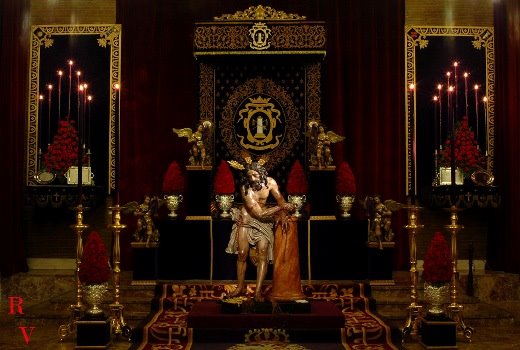

From this site. The image is just exceedingly beautiful, in my opinion.

Monday, February 22, 2010

Some (Late) Thoughts on Lent

The older I get, the more I realize how difficult it is to live by faith. Perhaps I am very much a product of this generation, a generation that has taken upon itself to adapt, wittingly or otherwise, a paradigm hitherto unknown to any in this country, or maybe because I realize I am now twenty one and have yet to prove anything significant to myself. Or maybe I am just undersexed, as a friend put it. I laughed a little at that, I admit. But for better or worse, I cannot now forget all that I have learned about my faith; I have idealized it, made it the primary criterion of my decisions. There are times when I feel very much like a cleric, especially when I am in the midst of friends who are not that religious; but I also feel out of place in the company of 'the holy', the so-called favorites of God, as it were.

And so, I admit, I miss being a nominal Catholic. Lent has come around again, and with it the reminder that I am a sinner. The past year hasn't really been a good one for me, especially spiritually. I feel as if God has honestly deserted me sometimes. Of course, I can't really complain about that (well at least not publicly, or aloud). I sometimes ask myself, 'What is the point?' Indeed, there doesn't seem to be one, since I am just as sinful, just as arrogant, just as obstinate as I was before the season started. Part me of wants to say that the whole discipline of Lent is just about trying to appear pious and good before other people; but at the same time, I know that I need it, need to become a better person, a holier person.

But maybe that's just it: Lent becomes too much of an exercise about us. It becomes a tedious exercise of phony self-improvement, as if such an important liturgical season were really just another vehicle for self-empowerment, self-aggrandization, and self-promotion. Lent used to be simpler: you would just abstain from meat on Fridays, pray the rosary on your knees with outstretched hands, sing the pasyon, or do some charitable deed to your fellow man. Perhaps, because we are living in a so-called 'sophisticated' age, we think that these things are too comical, too cartoonish to be taken seriously in this era where everyone wants to save Darfur, save the whales, save the trees and what not. How can abstaining from meat help the world? How can smudge of ash on one's forehead improve the lot of mankind? The answer, is, of course, evident: they don't. But they help us to master the heart, to tame the senses, to contemplate what we would otherwise be oblivious to. If there is anything I 'envy' about nominal Catholics, it is this recognition of human limitation. Sir Anthony Hopkins is reported to have once met a Jesuit, who told him the most effective prayer he knew: 'Fuck it, it's in God's hands.'

And so, I promise I will not care too much if I don't manage to fulfill all my Lenten promises. It would be a good thing if I did, but not for a second will I even think that a mark of a Lent well-spent is the number of pounds I have lost in the process, or how many versions of the Stabat Mater I've managed to listen to when these days of penance are over. Perhaps, the best mortification of all, is to realize that Lent is there to remind us to be perfect-- and not to demonstrate that we already are.

Wednesday, February 10, 2010

Festa Sant'Agata, Catania


A video from the recently concluded Feast of Saint Agatha in Catania, Sicily. These scenes are so familiar, so... natural, never mind the fact that this happened half a world from where I am. The waving of cloths, the fireworks, the presence of high dignitaries and the crush of people ranging from the merely curious to the feverishly devoted. And yes, even the clerics hanging on for dear life (as can be seen in the second video, below) Gotta love old school processions! Regular blogging will (hopefully) resume soon; do pray for me, that I may have the patience to endure freeloading groupmates and a ton of schoolwork.

Monday, February 08, 2010

OMG


Santo Nino 'del Mundo', from a recently concluded exhibit of the Congragacion del Santissimo Nombre de Jesus. And I thought I'd seen everything!