Monday, September 20, 2010

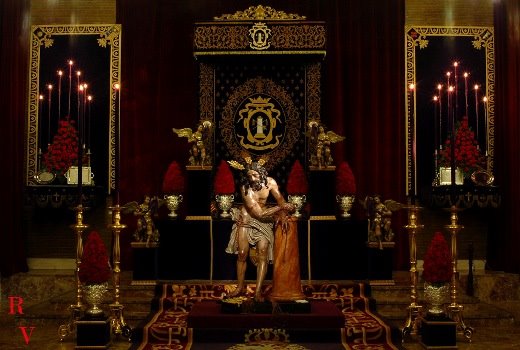
Good Friday in Corleone, Sicily

Oracion para tumbar los trabajos negros

Found on a rather questionable site. To be honest, it sounds a lot like the prayers my grandparents used to pray over me when I was but a child. My Spanish is a bit rusty, to please bear with the translation. That, and I lack sleep (thesis, ugh).


En el nombre del Padre, del Hijo y del Espíritu Santo, por el poder de la Santísima Trinidad y por el poder del Creador, tenga por virtud y poder de desechar encantamientos, brujerías, hechicerías y todo mal, dado, tirado o tomado en cualquier maleficio.

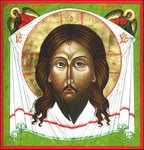
Por el poder del Creador, por el poder de San Cipriano y el redentor, por el poder de la Santísima trinidad y de mi Angel Guardián, por el poder de todos los Santos, mis enemigos quedan derrotados, que el espíritu Santo sea mi ayuda y me guarde de los malos espíritus. Señor haz que las armas de mis enemigos o enemigas, fueran hombres o mujeres, grandes o pequeños, si traen armas no me lastimen, sus ojos no me vean, sus lenguas desatadas no me ofendan, que ni diablos, brujos o brujas, polvos, velas, mala suerte, encantamientos, malos espíritus, sean reventados antes de llegar a mí. Que si soy perseguido los pasos de mis perseguidores sean clavados con clavos y crucetas. Cárceles y calabozos, candados y cadenas y grillos que encierran o aten mi cuerpo, revienten como reventaron los rayos y centellas, cuando Jesús expiro en la Cruz. Que mi cuerpo sea cubierto con el manto sagrado de la Verónica, para luego ver la redención del mundo. Amén.


---

In English:


In the Name of the Father, and of the Son, and of the Holy Ghost, by the power of the Most Holy Trinity, and by the power of the Creator, have I the virtue and power to dispose of  enchantments, witchcraft, sorceries and every evil, given, cast, or taken in whatever curse.


By the power of the Creator, by the power of Saint Cyprian and of the Redeemer, by the power of the Most Holy Trinity and of my guardian angel, by the power of all the saints, may my enemies be defeated, and that the Holy Spirit be my help and my protector against evil spirits. Lord, grant that the weapons of my enemies, be they men or women, great or small, if they should bring weapons, that they do not harm me, that their eyes no not see me, that their loose tongues do not offend me, that neither devils, witches and sorcerers, powder, candles, bad luck and enchantments, evil spirits, are loosed before reaching me. That if I pursued the footsteps of my pursuers they may be bound my nails and crosspieces. May prisons and jail cells, locks and chains and shackles that bind or fix my body, burst like thunder and lightning as thunder did burst when Jesus expired on the Cross. That my body be covered by the holy mantle of Veronica, then to see the redemption of the world.

Tuesday, August 31, 2010

Holy Terror


I have probably posted this video before, but a sudden thought just occurred to me. In many cultures, the sacred takes on a decidedly double-faced characteristic. The sacred, because it is numinous and otherworldly, escapes the grasp of human reason, and because of this, it can be said that the sacred technically fits neither category of benevolence or malevolence. What the sacred is, however, is terror--sheer, impalpable, creature-ing terror.Remember that sacred ultimately means being set apart-- but whether that is a good or bad thing for us remains to be seen. Perhaps the reason, then, why the practice of making vows to the saints perdures in the Philippines is because it is never wise to cross that which is not human. The sacred is untamed, wild, irrepressible and contagious. Maybe, just maybe, these vows are made, not just to bargain with the divine, but also to keep it out of the sphere of life as much as possible. After all, who wants to seek death by displeasing the Madonna, or St. Isidore the Laborer? Of course, I am just toying around in my head; but the idea that God, His Holy Mother, the nine choirs of angels and His saints constitute some sort of cosmic Justice League is ludicrous, maybe even dangerous.

In the video are penitents called 'magsasalibatbat', who crawl around town on their hands and knees dressed like the Nazarene. Upon reaching a shrine or visita in honor of the town's patron saint, they prostrate themselves upon the dust, while a cross is tied down to their backs. The remainder of the penitent act is spent with the cross bearing down on them.

And All The Angels and Saints

My current predicament (nothing serious, to be sure) is almost sure to prolong my absence from regular blogging. In the meantime, I thought I'd draw the reader's attention to a new blog I came across. Mr. Alex Castro runs 'And All the Angels and Saints', a blog dedicated to the art and craft of the santero-- saint-makers, literally, men who carve images of the saints for use in processions and in churches. As well, it offers interesting trivia and history on some of the more celebrated santos in the Philippines, including an image of the Dead Christ that was supposedly 'kidnapped'. Do check it out, it is quite a fun read.

On the Weather

One day last week, as I was taking the train to meet a friend, rainclouds suddenly blocked out the sun, and rain started to pour. In another instant the rainclouds were gone, and the sun was shining down again, but the rain perdured, now strong, now weak, drizzling, pouring, all this under a clear blue sky. I was suddenly reminded of an old superstition; whenever rain started to pour while the sun was up, they said, it was a sure sign that two tikbalang were about to be married. Having the body of a man and the head of a horse, the tikbalang is one of the more famous creatures of Philippine mythology; it has a taste for human flesh, they said, and when two of them were to be married, it's said, humans better watch out.

And sure as day, I saw a little old lady of about sixty, no doubt a grandmother, suddenly grab her grandson and give her a medallion of St. Benedict. She pressed it to his foreheard, lips, and heart, before finally crossing the child with the medallion. 'Crux sacra sit mihi lux, nunquam draco sit mihi dux.' Meanwhile, the child played gleefully with his PSP, as even then, the old lady resumed reading her tabloids, no doubt chewing up the latest gossip about her favorite stars' love lives.

Tuesday, August 03, 2010

Requiem Mass for President Ramon Magsaysay at the Brompton Oratory, 1957


 The late Leon Ma. Guerrero, of the prominent Guerrero clan of Manila was probably one of the most interesting figures to have served his nation. A dyed in the wool aristocrat (he spoke with an impeccable Oxford accent, to the delight of the British where he served as ambassador for seven years), it has been said of his family (to paraphrase Nick Joaquin) that they were at once marked by the most intense Catholicism and by the most intense nationalism; at once the fiercest defenders of tradition, while also fostering revolution on the other.

Mr. Guerrero served under the government of Ramon Magsaysay, who is, perhaps, one of the most beloved Presidents the Philippines has ever had. Magsaysay was as populist as they came, serving as a mechanic for a time and inviting the poor to come into the halls of Malacanang Palace where he would wine and dine with them. There too, is a story told that Magsaysay was able to bring about the surrender of communist rebels by circulating tales of aswangs -- blood-sucking, flesh-eating vampires-- loose in the mountains. President Magsaysay, sadly, died in a plane crash, and his body was never found.

The photo above shows the catafalque of President Magsaysay draped in the Philippine flag. Please excuse the somewhat poor quality of the photo, as I had no means to properly scan the book in which I found it. Rather, I just used my phone to snap a photo of said photo.

Here now is an excerpt from The Diplomatist about the Requiem Mass in honor of the fallen president, held in the London Oratory at Brompton in March of 1957.

... at the Brompton Oratory at 11 o'clock on the morning of Friday, 22 March the Earl of Scarborough, the Lord Chamberlain, representing H.M. the Queen at the Solemn Requiem Mass sung on the occasion of the funeral in Manila of the late President of the Philippines, Ramon Magsaysay. Her Majesty's Ambassador in the Philippines, Mr. G.L. Clutton, represented Her Majesty at the funeral. The Apostolic Delegate, Archbishop Gerald O'Hara, presided, Father P. Bushell was the celebrant, assisted by Father Mark Taylor and Father D. Wood, and the Archbishop of Westminster was represented by the Right Rev. Msgr. Morrough Bernard. Among the large congregation were diplomatic representatives of 67 countries including 25 ambassadors. Attending with the Philippine Ambassador and Mrs. Guerrero were members of the staff of the Embassy and others of the Filipino community in the United Kingdom, and members of the Philippine Society of London.

And finally, some choice words from Mr. Guerrero about his fallen commander in chief.

Yet none was closer to the ordinary Filipino than President Magsaysay. Perhaps it was because he never made his fortune, because he rose to power so quickly and so soon. Or perhaps the common people always took him as their own because he made them feel important, because he knew he would worry as much about an artesian well for their mountain village as about a new oil refinery, or about a poor postman's promotion as a change in the Cabinet.

Saturday, July 31, 2010

Que arrogante caudillo osara en su furor?


In honor of the feast of St. Ignatius of Loyola, here is now the Marcha de San Ignacio, otherwise known as the hymn of the Society of Jesus. They still teach it in grade schools of the Jesuit-run institutions here, although the words are different (it seems that each country has its own version of the song-- the one familiar to me, and most prevalent in the Philippines, may be found here)


Fundador / sois, Ignacio y General /
De la Compañía real /
Que Jesús / con su nombre distinguió. /
La legión de Loyola / con fiel corazón, /
Sin temor enarbola / la cruz por pendón: /
¡Lance, lance a la lid fiero Luzbel /
A sus monstruos en tropel! //
De Luzbel las legiones /
Se ven ya marchar /
Y sus negros pendones /
El sol enlutar, /
¡Compañía de Jesús / corre a la la lid, /
A la lid! /
Del infierno la gente /
No apague tu ardor, /
Que ilumina tu frente /
De Ignacio el valor. /
Ya voces escúchanse /
De trompas bélicas. /
Y el santo ejército /
Sin tregua bátase, /
Y alza sus lábaros /
En la batalla campal. /
Fiel presagio / del lauro bélico y de la paz. /
Del lauro y de la paz

Wednesday, July 28, 2010

El Patrocinio de San Jose


 The work of the Peruvian painter Gaspar Miguel del Berrio, 18th century.

Sunday, July 18, 2010

Very Important Prayer Request

Of your charity please pray for a certain lady, who could very well be considered a part of our family. Our old housekeeper Ines left to retire in June of last year, after 20 years of being with us. She is diabetic and is currently based in one of the more remote provinces of the Philippines, where easy access to hospitals is not common. A few weeks ago she injured her leg, and apparently it is now festering and there is a chance she may have to get the gangrenous leg amputated. This is just heartbreaking news for all of us, and especially for me. Please pray that it does not get worse, and if possible, to avert the possibility of the amputation. Thanks.

Sobriety

1.30 am on a Saturday morning, and the road is pitch black, the only consolation coming from a few street dim street lamps and the occasional headlights. No one uses this road much, not as much as some other thoroughfares at least. There is something about driving home in the ungodly hours that somehow makes it easier for your priorities to reach convergence. The radio had been playing crap for a few minutes now, so off it went, and I had to put on one of my dad's CDs to fill in the void.

Three things I saw that night that made me shake my head in absurdity. The first: a thick bundle of tattered black and gray firmly planted on an island in the middle of the road. I shone my headlights at the curious bundle, and discovered a few beer bottles next to it. The bundle shone, the material reflecting my lights to a degree. It looked like a massive but curiously splayed trash bag. I followed the length of the shiny black material until it came to an end-- and from that end protruded a pair of darkly tanned mounds of flesh terminating in calloused, bruised feet. It was a man inside the trash bag, apparently, and judging from the almost imperceptible movement in the trash bag, I could tell, thankfully, that he was alive.

The second instance occurred a little over half an hour after that. A rickety box-like thing was crossing the middle of the highway. It was a kariton, a wooden cart on wheels which, depending on its usage, was either a very poor man's version of a garbage truck, or in some cases, a mobile home, a few items of clothing and shelter, and sometimes even a pet dog for protection, finishing it. Behind it, a tiny old woman, bent and skinny and heaving, was pushing it, oblivious to the oncoming rush of cars at that ungodly hour.

Finally, I entered home stretch, that is to say, the last ten minutes of my drive home. For some strange reason, my stomach was churning, rebelling against the food I had earlier deposited there. It is now ten minutes after two in the morning, and what better way to cap off a minor spasm of hunger than with pan de sal, that ubiquitous Filipino breakfast bread. I parked the car next to the bakery, got off, bought my bread, when my shirt was accosted by an unseen force. A child, probably no more than 7, dressed in tatters, his face muddy, but you could see the hopefulness in it. He offered me sampaguita. 10 pesos for a strand. I bought one strand, handed him 10 pesos -- two brass coins just slightly bigger than my thumb. And he walked off, running to his friend in the dark who I presumed was probably around his age as well.

If you ever want to get rid of even the most insignificant hangover, I suggest a drive through the streets of Manila. There's horror and poetry there to do just that.

Wednesday, June 30, 2010

Trinidad Trifacial


I have blogged about the renegade icon of the Trinidad Trifacial before, but it's always nice to find an image of it that looks so... pagan. The Church of course has never really liked this depiction of the Blessed Trinity in that it seems to blur the distinctness of the Three Divine Persons. In Peru, the Trifacial, it seems, is quite popular (there is also another depiction, this time of the Holy Trinity as three Jesuses, although the Peruvian example I saw had all Personae dressed in papal robes); the image above, however, comes from the parish of Santos Justo y Pastor in Cuenca de Campos in the Spanish province of Valladolid. It is the work of an anonymous artist and probably dates back to the end of the 16th century.

I have heard Protestants say that the God of Catholicism is a very 'sensual' God; Spanish Catholicism and its many incarnations throughout its colonies, in particular, have a way of showing this sensuality that seems almost bizarre to our modern sensibilities. Should we be uneasy? To be honest, I really don't know. My conception of God has largely been molded more on abstract principles-- proper, decent, hyper-Roman, Roman Catholicism-- to be comfortable with such an image. But at the same time, it makes 'sense'-- the kind that only Catholics schooled in the logic and riotous horizons of imagination of Catholicism since birth can appreciate-- to think of God as a three faced man. In truth, it doesn't really have to make sense, I think. It just has to be feasible. More or less.

And besides, it is certainly better than thinking of God as a robed figure with a glowing light bulb for a head. I'm looking at you, Jack Chick.

Tuesday, June 29, 2010

Apu Iro


In honor of the Solemnity of Saints Peter and Paul, here is a post on Apu Iro-- 'Chief Iro', to use an approximate English equivalent, patron saint of Apalit in the province of Pampanga. The image of St. Peter is dressed in full papal regalia, complete with papal tiara and the fabled triple-bar cross. His face and hands are ivory, and his stockinged feet are encased in solid silver. These rest upon a finely worked cushion, while the saint is seated on a portable throne of solid silver. The saint's right hand, too, rests on a cushion, heavy with the burden of keeping the keys to the kingdom of heaven. A jeweled emerald ring shines brightly on the ivory finger of the saint. Like the Pope, the image is carried on the shoulders of men-- in this case, a myriad devotees who compete for the saint's attention. An ombrellino is held by a senior devotee over the saint's head, as a gesture of reverence as well as in keeping with established papal protocol. He is carried amidst mad festivity from his chapel in Sulipan to the town church of Apalit.

The next day, the saint is returned, again with magnificent pomp and ceremony, to his chapel, there to repose until next year's festivities. He is carried to a sumptuously appointed barge-- which the locals call a pagoda-- by the yellow-clad Knights of St. Peter, traversing the river to cries of 'Viva' and the mad flinging of rice and foodstuffs. In heathen days these were said to have been offerings to the crocodiles which resided in the river, for peace and safety. Devotees, meanwhile, engage in a riotous splashing of water, whilst more Knights swim in the river, pulling the ropes attached to the barge in an act of penance and 'sucking up' to the Divine. Finally, their sacred deed done, the men return to their homes, to feast and glut themselves, in honor of Apung Iro.

Monday, June 28, 2010

El Gran Poder Attacked


One of the most popular images of Our Lord in Spain, Jesus del Gran Poder, aptly called the Lord of Seville, was physically attacked -- kicked off its pedestal, stomped, and having its right arm almost ripped off in the process by its deranged attacker. Supposedly, the man shouted 'I am the Son of God' when he assaulted the image of the Lord. My Spanish is not the best in the world, but you may read the pertinent articles here:

El Gran Poder atacado con violencia
El agresor del Gran Poder, al psiquiatrico por creerse <>

The image of El Gran Poder is four hundred years old, having been sculpted in the 17th century by the sculptor Juan de Mesa. It is perhaps the most venerated image of Our Lord in Seville and figures prominently in the processions of Good Friday. This execrable act of sacrilege has outraged Sevillanos, and in response, the Hermandad del Gram Poder organized, on Friday, an "extraordinario besamanos"-- an act of devotion common in Hispanic countries, wherein devotees line up to kiss the precious hands of Our Lord. Youtube has some videos of this event, where the line of devotees stretched well outside the church's grounds. Everyone, young and old, participated in the penitential act.


Alive

Apologies for the long lull in posting. The new school year has just started here and I am busy with school; in addition, personal baggage has largely taken away much of my free time of late. For now, I would like to request the few people still reading this blog (are there any? lol) to pray for some intentions of mine. First, for Mark, a friend of mine, that he stop wasting his life and that he may abandon his lifestyle of constant fornication and sodomy. I also request prayers for my grandmother, who had an accident this morning. She is turning 85 tomorrow, and though she is still in otherwise admirable health, she had to be confined at the hospital for a period of 24 hours. And lastly, for me, that I may be able to keep my focus and quit procrastinating. That is all.

Thursday, June 10, 2010

La Sanch, Perpignan

Not in Spain, or Portugal, or Italy, but in the south of France. If I'm correct, Perpignan is quite close to Barcelona. The procession of black, hooded penitents is led by a nazareno (for lack of a better term) in a red capirote, to the solemn ringing of a bell, whilst the rest of the company beat drums. Religious images are borne on the shoulders of devotees and borne around town for the veneration of the faithful.

http://www.youtube.com/watch?v=CfwE93GvnDY
Here is a link to a photoset on Flickr: Procession de la Sanch

Monday, May 31, 2010

Some Processional Images

Just for fun, here are some processional images of the Passion, from one of the provinces (I think Rizal? Or Laguna?) here in the Philippines. These were found on Flickr, under Mr. Elmer Torres' (Flickr name magsicap) photostream. Depicted are: Nuestro Senor Desmayado (Christ with the angel, after the flagellation); Nuestro Senor de Las Sietes Palabras (Sto. Cristo between the Virgin and St. John); and El Descendimiento (Christ being brought down from the Cross).


Sunday, May 30, 2010

Historical Curiosities of San Agustin Church: The Antecoro


Photo of the Chapel at the antecoro (ante-choir) of San Agustin church in Manila. The retablo was formerly located in the Chapel of St. Augustine and contained the remains of the Spanish explorer, and founder of the city of Manila, Miguel Lopez de Legaspi. From the book 'San Agustin: Art & History 1571 - 2000', comes this excerpt about this chapel.

"... In the central niche of the retablo is a crucifix which is believed to be the same one brought by Fray Alonso de Mentrida  from the Visayas in 1602. Mentrida's crucifix originally stood over the railing of the adjoining choirloft. It is said that the image on the cross extended its hand in absolution to a friar who, in the throes of death, did not have recourse to the last rites. The British toppled the cross in 1762, remarking that it was black and ugly. During the restoration of 1970, this crucifix was recovered, cleaned of its coat of black paint, and installed in the present retablo. The rest of the champer was cleaned up in 1974 in time for the visit of the Superior General of the Order, Fr. Theodore Tack. The furniture and the rest of the statuary are from the Luis Maria Araneta collection.


The antecoro, small as it is, has its share of intriguing stories; the most scandalous of these was the murder of a high ranking member of the Community by some of the friars. One day in 1617 the prior provincial Fr. Vicente de Sepulveda was found murdered in his cell. In order to find the culprits who were suspected of still being in the monastery, the corpse was laid out in this room; its arm was propped up such that the index finger pointed at whoever entered the room from the corridor. By feeling the heartbeat of each friar who came to pay his respects, the perpetrators were unmasked; they were then tried, hanged, and buried within the walls of the compound..."

Monday, May 24, 2010

The Silence of God


One of the most harrowing novels I have ever read is 'Silence', by the celebrated Japanese author, Shusaku Endo. Set in seventeenth century Japan, the novel tells the story of Fr. Sebastiao Rodrigues, a young Portuguese priest hungry for glory and martyrdom, and his personal mission of finding his mentor Fr. Cristovao Ferreira, former provincial of the Jesuits in Japan, who is rumored to have apostasized after several hours of torture. The novel deals with mainly with the question of God's silence, that 'sickening silence', as Fr. Rodrigues puts it, in the face of the many sufferings of the small, withering Christian population in Japan. Why does God permit so much suffering to befall His people?, he asks.Why does God not cry out in defense of His faithful?

The story of the persecution of Christians in Japan is one of bitter pain and sorrowful reticence. Believers were often crucified to bamboo poles made to resemble crosses, as in the case of St. Paul Miki; the bodies were left to hang, and many were encouraged to do violence against them. A common procedure was to skewer the bodies with sharpened bamboo poles, pushed ever so slowly against the bodies of the Christians. In the novel, Endo highlights the use of water torture, in which Christians were tied to stakes and left in the water; the rising tide would do the damage. And perhaps most infamous of all, there was the pit, so-called because Christians were lowered onto a pit filled with all the filth of humanity-- feces, urine, vomit, among others-- to wallow like pigs. The flesh of the head was often cut as well, which served as breeding ground for bacteria. Safe to say, death in the pit-- if death came so quickly from it, that is-- was a very painful way to die.

Fr. Sebastiao Rodrigues has, naturally, been warned of these tortures, and has steeled himself for such a death from the moment he stepped on Japanese soil. But instead of hostile natives, he finds a clandestine community of Christians willing to die for their defense. Thinking himself safe within their community, the young priest starts to emerge from his hiding place more and more, until at last, he is noticed. As a result, the small Christian village becomes the target of greater scrutiny from the feudal lords, and from then on, Fr. Rodrigues begins to realize that martyrdom is not all it is cut out to be. And indeed, the more time he spends in Japan, the more he begins to see that his presence has brought nothing but bad luck to the Christian villages wise, or perhaps foolish, enough to welcome him. There too, is the bumbling, foaming, pathetic shell of man called Kichijiro, who apostasized from Christianity out of cowardice. Seeing his family tortured, but wanting to preserve his life, Kichijiro does the unthinkable and tramples upon the fumie of Christ.

A theme begins to arise at this point: is love worth it? Fr. Rodrigues believes that his mission to this most far flung nation of the earth was motivated by a greater love, a love that desires to unite all men in Christ. But, as he has seen, his love has done nothing but bring sorrow and misfortune to the already withering Christian population of Japan. Is it really love that moves him? And what of Christ, is His own love worth it? The person of Kichijiro represents, for Fr. Rodrigues, man at his most pathetic, that one simply cannot afford to loathe him anymore. Indeed, he adopts a kind of condescending pattering attitude towards Kichijiro. That Christ died for sinners is easy enough to imagine, says Ferreira; but what about the mediocre?

However, it is the seeming indifference of God that troubles Ferreira the most, a God, who, it seems, was content folding His arms while His children suffered on earth. This is bolstered by the various acts of martyrdom that Fr. Rodrigues witnesses, the first, on the coast of the first village, where two young men are submitted to water torture. But there are no choirs of angels to be seen to collect the body of the murdered Christians, no peals of thunder echoing the wrath of God, nothing but the blackness and monotonous ebbing and flowing of an endless sea to accompany the two martyrs to Paradise, if such a concept were even impossible to believe in at tat moment. The second martyrdom sees Fr. Rodrigues captured by the shogun's samurai and brought to prison for questioning, a fate which was orchestrated by Kichijiro himself. Again, the familiar icons of the martyr narrative are gone; there are no hostilities between Rodrigues and his captors at all. On the contrary, he is engaged in theological discussion by a Portuguese-speaking translator and even treated with utmost politeness by Inoue himself, governor of Chikogoku, and sworn enemy of the Christian population in that part of Japan. Indeed, Inoue himself finds nothing wrong with Christian doctrine; he simply believes it will never take root in Japan, and being thus, was useless.

Here, Fr. Rodrigues sees an old, one-eyed man, a Christian like himself, die for Christ, in the most absurdly insignificant way, beheaded suddenly, quickly, nonchalantly, by men with no convictions and no stake and no care for Christianity at all, in short, hired men, with whom he would even occasionally banter. There was no tremor in the earth nor did the skies even darken when the old man died, just the dull and blind groaning of cicadas and the sleepy, noonday heat to witness another man die for the Faith.

However, it is Fr. Rodrigues's meeting with his old mentor, Fr. Ferreira, that most unnerves him. Ferreira had apostasized under torture, and concludes that Christianity would never fully take root in the strange swampy soil of Japan (Ferreira is a historical figure; he later wrote a tract refuting Christianity and became a Zen Buddhist monk). For Fr. Rodrigues, this blow was the most personal, the most damaging. Ferreira had planted the impetus for Rodrigues's desire to evangelize the Indies, but now his own convictions-- the same which planted itself so resolutely in Rodrigues-- was shattered. Eventually Rodrigues himself was to face the pit, and in one of the most haunting scenes in the entire novel, realizes that he, too, must commit the unthinkable, and so steps on the fumie.

At this point, Fr. Rodrigues realizes that God has never really been silent. As he gazes on the face of Christ, that face which he has clasped to his heart from his childhood, and the same face which, now blackened with the footsteps of thousands of men whose 'feet ached' at what they were about to do, simply stared back at him in agony. From a theological standpoint, we see here the audacious logic of the Incarnation: God emptying Himself of divinity and coming to dwell amongst the misery and grime of creation. Many cultures abound with myths of gods descending from heaven to dwell or mate with humankind, but where Christianity differs is that, Christ alone, of all the gods and demigods, knew the terror of God. There is a line in the novel where Fr. Rodrigues reflects on one of the seven last words of Christ: 'Eloi, Eloi, lama sabacthani', and concludes that, more than a prayer, it too must have 'issued from terror at the silence of God.'

A question is now raised about the nature of love: can God really be called a God of love, even when He has chosen not to eliminate it from the world? Perhaps a deeper issue that lies here is whether or not we think God was right in choosing to suffer with humanity, rather than remove the sufferings altogether. Love is heart-breaking, we often hear it said, but a point we always seem to forget, is that heartbreak hurts, and that it is a kind of hurt which affects both parties. When Fr. Rodrigues tramples on the fumie, he has an epiphany of sorts, and imagines the fumie saying to him:
"Trample! It was to be trampled on by men that I was born into this world. It was to share men's pain that I carried my cross..."
Paradoxically, the greatest act of kindness which Fr. Rodrigues can now do, is to trample on the face of Christ. He is informed by the interpreter that the Christians hanging in the pit have apostasized many times over, but these confessions would be useless until he himself does so. In agony, Rodrigues places his foot on the fumie, and in the spaces between seconds that are eternity, his feet ached, too, and in the far distance, a cock crowed, as it did for St. Peter when he denied Our Lord thrice. Whether Fr. Rodrigues's faith is now completely shattered, like his mentor's, is not explicitly stated, and the novel ends neither confirming nor denying if his moral integrity remained intact. But he is now a haunted man, and cannot now bear to stand to look at Fr. Ferreira, because he only sees the common ugliness that now festers in both of them, the ugliness, and madness, as it were, of love. But that perhaps is what martyrdom, and love, are all about-- to see the ugliness of sin and face it as it is. Fr. Rodrigues's pride demanded a physical, even brutal death in atonement and satisfaction for Ferreira's apostasy, but what was ultimately extracted from him was the crushing of his soul, the meriting of the hatred of the Church and the elect. 

In a line from the book, Fr. Rodrigues rationalizes his actions by saying that Christ, too, would have apostasized to save the lives of the Christians; after all, didn't He Himself apostasize, by emptying Himself of divinity? Do not his actions cheat man of God's justice? And most of all, did He not feel the absence of God while He hung on the Cross? If there is a point to be made here, is that to love, to, is to experience terror. Its logic is inscrutable, irrational, even dangerous. But at the same time, can it still be called love if it does not touch on these things? The Japanese Christians could have dumped Christianity en masse and gone back to Shintoism/Buddhism rather than endure suppression and the withering of their numbers. Why, then, did they choose to suffer? Endo gives us a clue by saying that, for the first time in their lives, they were treated as humans, as equals, as faces, by the Portuguese missionaries. In short, it was love that nailed the face of Christ to their breasts, the same way that love held His arms to the wood of the cross. Love, without any hint of polemic, politics, or agenda. There seems to be no other answer.

There, perhaps in a nutshell, is the reason why God has been silent-- because God finally has a face, a beautiful, ugly, sorrowful, agonizing, yet serene face, twisted, beaten, bloody, and yet strangely and profoundly beautiful, all the more so. The ultimate 'folly' of the Incarnation is that the Almighty has come down to be be butchered, to dwell amongst the squalor and misery of human existence. But where are the choirs of angels weeping? Where has their screaming gone? Why hasn't the earth rent itself in twain, and fire consume all creation, in justice for the murder of the Son of God? And we realize, that there is no answer to this question, except the face of Christ, in all its butchered mess, looking back with mournful eyes at humanity, saying, 'I too understand.' All we can hope to do is stare back.

"Eternal Father, turn away Thine angry gaze from all guilty people whose faces have become unsightly in Thy eyes. Look instead upon the face of Thy Beloved Son, for this is the Face of Him in Whom Thou art well pleased. We now offer Thee this Holy face, covered with shame and disfigured by bloody bruises, in reparation for the crimes of our age, in order to appease Thee anger, justly provoked against us. Because Thy Divine Son, our Redeemer, has taken upon His head all the sins of His people that they might be spared, we now beg of Thee, Eternal Father, to grant us mercy. Amen."

Thursday, May 20, 2010

Images of Christ in Ivory

In colonial Philippines, the Santo Cristo-- that is, the image of Christ Crucified-- was almost always the most expensive ornament a church may have. It has been rendered differently and through various media throughout the centuries, being painted, or made of wood, stone, or otherwise decorated with costly materials. In the Spanish tradition, rays of beaten gold or silver often extend from the arms of the cross, forming a sort of 'halo' or mandorla of sunbursts around the figure of the crucified. The corpus of the Santo Cristo was often done in ivory, considered the most expensive, and therefore, the most befitting, of the media in which the figure of Our Lord may be rendered. In the Philippines, as mentioned in the previous post, the Chinese excelled in this trade, eventually teaching the art to the native Filipino population. Ivory was sourced from Goa, itself a major hub of the ivory-related art; and in Macau, too, the tradition flourished. Notably, in the Philippines, the slightly askew, 'bent' shape of ivory images (a result of the natural curvature of elephant tusks), was seen as a sign of elegance and superior taste; the effect was also often replicated on non-ivory images.

In the aftermath of the revolution against Spain, many friars took a sizable share of the ivory images in the Philippines, back to their native country. As well, the galleon trade with Mexico ensured that these Far Eastern works of devotional art were duly represented in the New World. Here are some photos of various images of the Crucified in ivory. These images were found on Flickr; however, the exact provenances of these images, are still a matter of scholarly debate.

Photo source:
Apo Lakay's photostream on Flickr


These first two images are attributed to Leoncio Asuncion, one of the most renowned sculptors in 19th century Philippines. However, the image does not follow the conventions for the Santo Cristo as mostly found in the Philippines. A good overview on this may be read at the Flickr page where this photo was found: Sto. Cristo Expirante


Left: a Rococo style Sto. Cristo Moribundo, found at the San Agustin museum in Manila; and on the Right, three corpuses. The middle one is Filipino, while the two flanking it are thought to be Goan. Again, please visit Apo Lakay's photostream, which contains more information about these images.

Two more examples. Sadly, I regretted to make a mental note of the photostream(s) where I found these.

The image above may be found, if I remember correctly, in the Mexico city Cathedral. It is reputedly of Philippine provenance.

Finally:

This rather ornate, and sumptuously beautiful crucifix, is probably one of the most stunning I have ever laid eyes on. No word on the provenance, however. Notice the silver cantoneras and the rays emanating from the arms of the cross.

And, just for fun, here is a set of ivory images of Christ, that tell the story of the Via Crucis (link). These belong to a family in Iloilo, Philippines. From left to right, they depict Our Lord in prayer at Gethsemani; Nuestro Senor Cautivo (Our Lord Captive); Nuestro Senor de la Paciencia (Our Lord of Patience); Nuestro Senor de la Columna (Our Lord of the Column); the Ecce Home; and Nuestro Padre Jeus Nazareno (Our Father Jesus the Nazarene). This delightful image was found here: Via Crusis.

Sunday, May 09, 2010

Turris Eburnea (In Honor of the Month of Mary)

Tota pulchra es, Maria,
et macula originalis non est in te.
Vestimentum tuum candidum quasi nix, et facies tua sicut sol.
Tota pulchra es, Maria,
et macula originalis non est in te.
Tu gloria Jerusalem, tu laetitia Israel, tu honorificentia populi nostri.
Tota pulchra es, Maria.
Ivory image of the Our Lady of the Immaculate Conception, probably from Macau or the Philippines. The features of the image are notably Chinese, and it is well known that the Chinese settlers in the Philippines excelled in the craft of ivory sculpting. However, Macau was also well known for that fact, and was a major source of ivory for sculptors in the Philippines. It also deviates from the standard depictions of the Madonna in the Philippines (notably the hair and the resplendor). This image is found at the Metropolitan Museum of Art in New York City, where it is attributed to Philippine workshops and labeled under 'Spanish Colonial'.